Sales and Marketing Are Different Functions.. So Why Do Businesses Need Both?
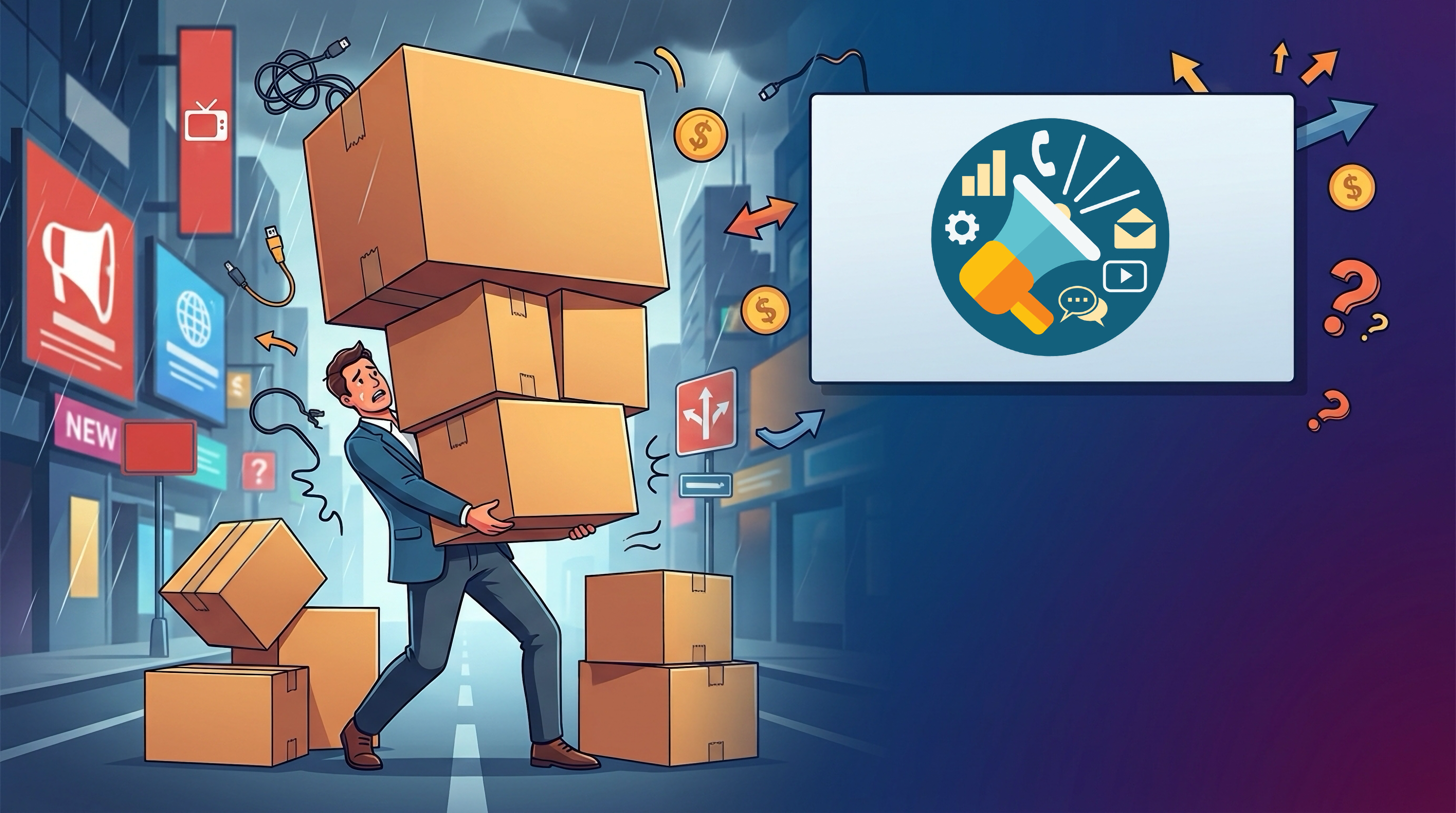
“We need more sales, let’s do some marketing.” It sounds logical but there’s a problem... sales and marketing are not the same.
“We need more sales, let’s do some marketing.”
It sounds logical.
But there’s a problem.
Sales and marketing are not the same.
They work closely together. They share the same ultimate goal which is to help a business grow, but they do it in very different ways.
Treating sales and marketing as one function can create confusion, waste budgets, miss opportunities and, perhaps most importantly, the classic business question:
“Why are we getting attention but not enough customers?”
Marketing Gets You Noticed. Sales Gets You Chosen.
The simplest way to think about it is this:
Marketing creates awareness, interest and opportunity.
Sales turns opportunity into revenue.
Marketing asks:
“How do we get the right people interested in this business?”
Sales asks:
“How do we help this interested person become a customer?”
Both are essential.
But they require different strategies, skills and approaches.
What Does Marketing Actually Do?
Marketing is about creating visibility, awareness, trust and demand.
Before someone buys from you, they usually need to know that you exist. Then they need a reason to pay attention. Then they need to believe that you understand their problem. Then they need to trust that your product or service can actually help them.
That is where marketing comes in.
Marketing can include:
• Website design and optimisation
• Search Engine Optimisation (SEO) and Answer Engine Optimisation (AEO)
• Google search visibility
• Social media marketing
• Content marketing
• Email marketing
• Branding
• Video and creative content
• Paid advertising
• Customer research
• Campaign strategy
• Remarketing
• Marketing automation
Good marketing doesn't simply shout:
“BUY FROM US!”
It gives people a reason to stop scrolling, click, read, watch, investigate and eventually make contact.
So What Does Sales Do?
Sales takes the relationship further.
A potential customer might have seen your website, found you through Google, watched one of your videos, followed you on social media, downloaded something, filled in a contact form, called your business or met you at an event.
They are now an opportunity.
Sales is about understanding that opportunity and helping the person decide whether your solution is right for them.
That might involve:
• Speaking to prospects
• Understanding their needs
• Qualifying leads
• Demonstrating products or services
• Answering questions
• Handling objections
• Preparing proposals
• Negotiating
• Following up
• Closing the deal
• Building relationships
Marketing can bring someone to your door.
Sales helps them walk through it.
The Big Myth: “If Marketing Is Working, Sales Shouldn't Have To Sell”
This is one of the biggest misconceptions we see.
Imagine a restaurant.
Marketing gets people thinking:
“That restaurant looks great.”
Sales, in a broader business sense helps turn that interest into an actual transaction.
The same principle applies to almost every business.
A fantastic marketing campaign doesn't automatically mean someone will buy.
And a fantastic salesperson can't sell to people who have never heard of the company.
That's why the two functions need to work together.
Marketing Is Playing the Long Game
Marketing often works over time.
Someone might discover your company today but not become a customer for weeks, months or even years.
For example, someone searching Google for:
“Best CRM for a small business”
may not be ready to buy immediately.
They might read three articles, watch two videos, compare five companies, talk to their team, then come back six weeks later.
Good marketing helps your business stay in that person's consideration.
This is particularly important for businesses with longer buying journeys.
Sales Is Often Playing the Shorter Game
Once a prospect has demonstrated genuine interest, sales can move the relationship forward.
Imagine someone contacts your business and says:
“We need a new website and CRM for our company. Can you help?”
They have already moved beyond basic awareness.
Now the conversation becomes:
What do they actually need?
What problem are they trying to solve?
What budget do they have?
When do they need it?
Why should they choose you?
That's sales.
And this is where human interaction, experience and communication can make a huge difference.
Marketing Without Sales Can Create a Problem
Imagine investing in a targeted marketing campaign.
The campaign generates:
Significant visibility and brand exposure
A strong increase in website traffic
A steady flow of new enquiries and potential customers
The important question is not simply how much attention the campaign generates, but how effectively those enquiries are converted into genuine business opportunities and, ultimately, customers.
Sounds fantastic.
But what happens next?
If nobody follows up with those enquiries, the marketing campaign hasn't necessarily failed.
The business may have a sales problem.
Leads need to be contacted. Questions need answering. Quotes need sending. Follow-ups need to happen. Opportunities need managing.
Marketing created the opportunity.
The sales process needs to convert it.
Sales Without Marketing Has a Problem Too
Now imagine the opposite.
You have an incredible salesperson. They're persuasive, knowledgeable and excellent at building relationships.
But nobody knows your company exists.
There aren't enough enquiries. There are very few leads. Your website isn't generating traffic. Your brand isn't visible.
Your salesperson spends most of their time searching for people to contact.
That's an expensive way to grow.
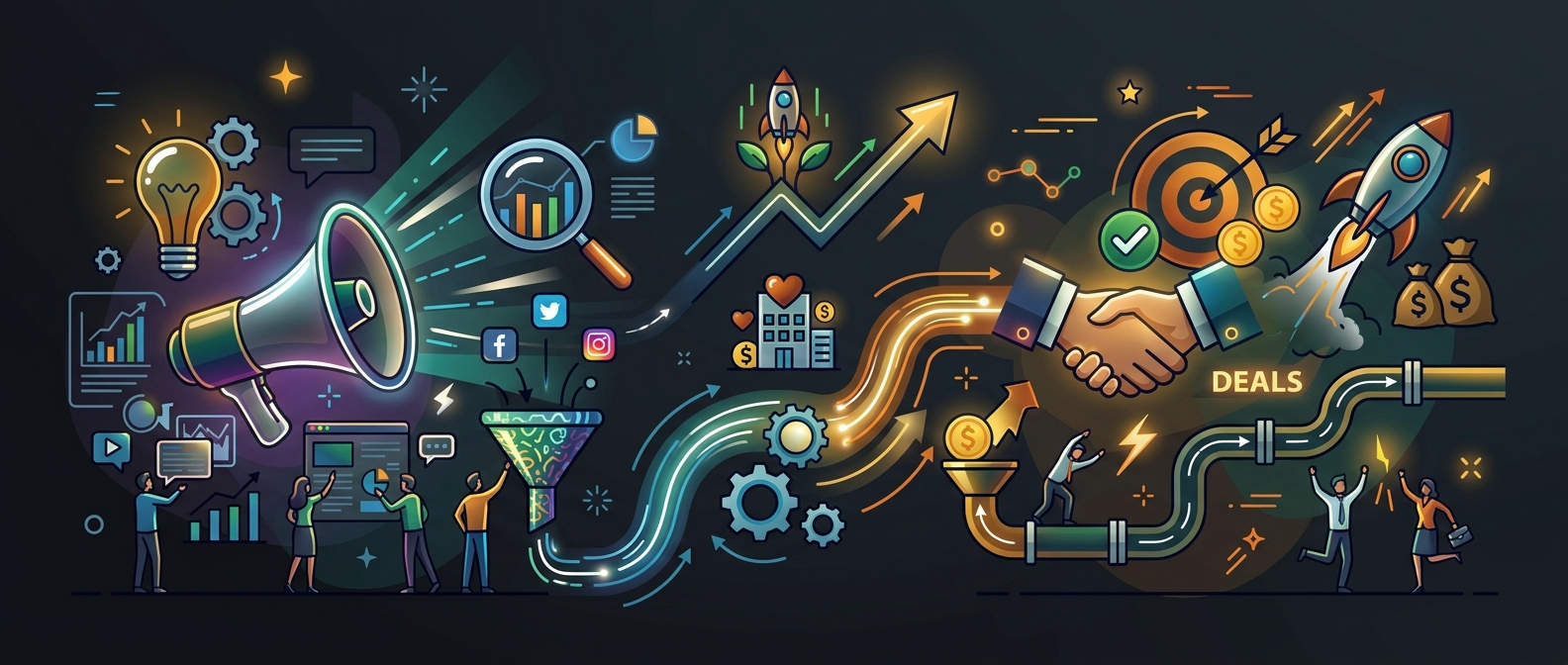
Marketing creates a pipeline of potential customers that sales can work with.
The Customer Journey Needs Both
Think about the customer journey as a series of steps:
Awareness → Interest → Consideration → Enquiry → Conversation → Proposal → Purchase → Loyalty
Marketing has a major role in the earlier stages.
Sales becomes increasingly important as someone moves towards making a purchase.
But there is overlap.
And that's important.
The best businesses don't create a wall between sales and marketing.
They create a connected customer journey.
Where Digital Marketing Changes the Game
Modern businesses have another advantage.
Digital technology allows marketing and sales activity to become much more connected.
For example:
A potential customer sees an advert.
↓
They visit your website.
↓
They read a blog.
↓
They download a guide.
↓
Their details enter your CRM.
↓
They receive a relevant follow-up.
↓
A salesperson contacts them.
↓
The salesperson can see their previous interactions.
↓
A proposal is created.
↓
The customer becomes a client.
That is much more powerful than simply posting something on social media and hoping somebody buys.
Your Website Is Not Just a Digital Brochure
A website shouldn't simply say:
“Here we are. These are our services. Here's our phone number.”
Your website can become part of your sales and marketing system.
It can:
• Attract visitors through SEO
• Explain your services
• Build credibility
• Answer common questions
• Capture leads
• Book appointments
• Showcase case studies
• Collect customer information
• Integrate with your CRM
• Support sales conversations
In other words:
Your website can market your business while helping your sales team sell it.
The Real Opportunity: Sales + Marketing + Technology
This is where things get interesting.
The future isn't really about choosing between sales and marketing.
It's about connecting them.
Imagine having:
Website + SEO + Content + CRM + Lead Generation + Automation + Sales Pipeline + Customer Data
working together.
Instead of asking:
“Are we doing enough marketing?”
or:
“Are our salespeople selling enough?”
you can start asking a much better question:
“Where are customers dropping out of our journey?”
That's a much more useful business question.
So, Should Your Sales and Marketing Teams Work Together?
Absolutely.
But working together doesn't mean doing the same job.
Marketing should understand what makes a good lead.
Sales should understand where those leads are coming from.
Marketing should know which campaigns generate enquiries.
Sales should provide feedback about the quality of those enquiries.
Marketing can identify patterns in customer behaviour.
Sales can provide real-world insight into customer objections and buying decisions.
The two functions should constantly feed information back to each other.
The FKDA View
At FK Digital Alliance, we believe technology should connect the different parts of a business rather than create more silos.
Your website shouldn't operate separately from your marketing.
Your marketing shouldn't operate separately from your CRM.
Your CRM shouldn't operate separately from your sales process.
And your sales team shouldn't be disconnected from the data generated by your marketing.
Everything should work towards the same goal: creating better customer journeys and sustainable business growth.
Because ultimately, sales and marketing aren't competitors.
They're partners.
Marketing creates the opportunity.
Sales develops the opportunity.
Technology connects the two.
And the customer decides whether the whole experience is good enough to earn their business.
Sales vs Marketing: The Simple Difference
Marketing | Sales
Creates awareness | Creates conversations
Generates interest | Qualifies opportunities
Builds the brand | Builds relationships
Attracts potential customers | Engages potential customers
Communicates value | Demonstrates value
Builds long-term demand | Drives revenue
Measures reach, engagement and leads | Measures opportunities, conversions and revenue
Neither is more important.
They simply solve different parts of the same problem.
Ready to Connect Your Sales & Marketing?
If your business has great products or services but your sales, marketing and technology feel disconnected, it may be time to look at the bigger picture.
FK Digital Alliance helps businesses bring their digital presence, marketing and business technology together, creating connected systems designed around how their customers actually buy.
Sales and marketing aren't the same job.
But when they work together properly, they can become a powerful engine for business growth.
Frequently asked questions
What is the primary difference between sales and marketing?+
Marketing focuses on creating awareness, interest, and demand, getting potential customers to notice your business. Sales then takes that interest and converts opportunities into revenue by understanding needs and closing deals.
Why do businesses need both sales and marketing teams?+
Businesses need both because marketing generates leads and builds brand visibility, while sales converts those leads into paying customers. One creates opportunities, the other capitalises on them. They are two distinct, yet complementary functions.
How does marketing support the sales process?+
Marketing supports sales by building brand awareness, generating qualified leads, and nurturing prospects through the early stages of the customer journey. It ensures sales has a consistent pipeline of interested individuals to engage with.
What happens if a business only focuses on sales without marketing?+
If a business only focuses on sales, its sales team will struggle to find prospects, spending valuable time searching for leads instead of closing deals. There won't be enough awareness or interest to sustain consistent growth.
What happens if a business only focuses on marketing without sales?+
Without a strong sales process, even successful marketing campaigns generating many leads may fail to convert into revenue. Opportunities will be missed if no one follows up, qualifies, or closes the deals with interested prospects.